
Here are a few tips for resolving cognitive dissonance; this article suggests asking the following questions.
- What are the two cognitions that aren’t fitting together?
- What actions would I need to take to eliminate that dissonance?
- Do I need to change any specific behaviors? Or do I need to change a mindset or belief?
- How important is it for me to resolve the dissonance?
It seems that cognitive dissonance is quite similar to holy dissatisfaction, which I addressed in this post.
It has two abilities; it can put you in a place where you are stuck in the dark, or it can shine on that darkness, and give you a means to get into the light.
We get to choose.
So here I’ll do some inner work right out in the open.
Feel free to stick with me while I ruminate.
In my previous post, I listed three separate areas that are always on my mind, but somehow, there seems to be some cognitive dissonance going on.
- Helping people isn’t clear enough.
*What are the two cognitions that aren’t fitting together? My desire to help people vs. my desire to stay at home with my own thoughts is clearly at odds with each other.
*What actions would I need to take to eliminate that dissonance? I need to MAKE time for others and observe people better for places where they can use help.
*Do I need to change any specific behaviors? Or do I need to change a belief or a mindset? Be more discerning.
Sometimes helping people is not only physical, as in helping them clean out a closet, paint a room , or move across town.
Sometimes it is simply sitting quietly with them while they take time to grieve or to try to figure things out.
Discernment and timing are most important here.
The belief I need to change is that in many cases, I feel like folks can work it out themselves, why would they need my help?
When likely, they are too afraid to or shy to ask for it.
How many times do we say “I don’t want to bother you but….?”
They probably do too.
*How important is it for me to resolve the dissonance? Resolving this dissonance is imperative.
- Just writing isn’t enough.
*What are the two cognitions that aren’t fitting together? It is said by many, that to be a writer, you must write.
Writers write. That’s what they do.
Every day; I need to write every day.
Also, great writers read, a lot.
I go in cycles, even though I know that writing often, makes writing easier, and reading many different sources, whether you agree with what has been written, or not, causes your brain to be more creative, and more critical in its thinking, allows thoughts to flow more freely.
*What actions would I need to take to eliminate that dissonance? I have journals and documents full of junk.
Inside those tomes of junk though, there are jewels.
Lessons learned.
Grievances grieved.
Abundance of joy portrayed, even atrocities forgiven.
I need to take more time to excavate them, and share the most helpful parts.
*Do I need to change any specific behaviors? Or do I need to change a mindset or belief? I believe my mindset to be sound, but my behaviors can get out of sync.
I am very good when I have a schedule; I have a schedule.
When cognitive dissonance shows up, my schedules go out the window. Laziness or fogginess then prevails.
One thing I have found, is that just because you have a schedule, doesn’t mean it is forever.
Recognizing when it becomes obsolete is a big thing.
When this happens, I need not delay – but change it!
Changing it up is most helpful. How about doing that instead of binge watching something on TV?
*How important is it for me to resolve the dissonance? One of my mentors, Sharon, tells a story of her driving passed a graveyard once, and having to pull over to the side of the road because she was weeping so hard. (She is not a crier!)
She prayed and asked why she was having this response, and the answer she heard was that she was weeping for all the gifts and talents that were buried there in that grave yard that had never been realized.
Well I’m not much of a crier either, but if I had the the sense of going to my grave without sharing all that my experiences have taught me, well, that would make me cry too.
- Enjoying taking photos isn’t enough.
*What are the two cognitions that aren’t fitting together? I enjoy taking photos of natural things.
I love clouds, skies, sunrises, sunsets, rivers, and mountains. All of these have found their way into the view finder; on my phone.
I have a regular camera. I don’t know how to use it.
I’ve always been a watcher, so to speak, but when I started taking photos on my phone, I began to realize that I was looking are so much more than just clouds.
They are an expression of God’s love for me, and these things show me just how much he wants me to enjoy all that He has created.
These things show His power and His majesty.
*What actions would I need to take to eliminate that dissonance? I’ve printed out all the camera instructions so that they are easy to see.
Just like reading, I need to take the time to study the manual, and then actually do the work.
*Do I need to change any specific behaviors? Or do I need to change a mindset or belief? The biggest behavior is what I listed before, Schedule, rework that schedule. I need to schedule time for writing, schedule time for reading, schedule time for learning.
Then stick with it! (Practice what I preach!)
*How important is it for me to resolve the dissonance? It will be the difference between being successful, or being stagnant.
The first part of 2019, I did really well in my journal.
For the second half of the year, my blog posts have been very regular, even if the topics were super varied. (Maybe that is better?)
This morning I was able to read the article from magazine that inspired A Beautiful Day in the Neighborhood. (Movie with Tom Hanks as Mr. Rogers)
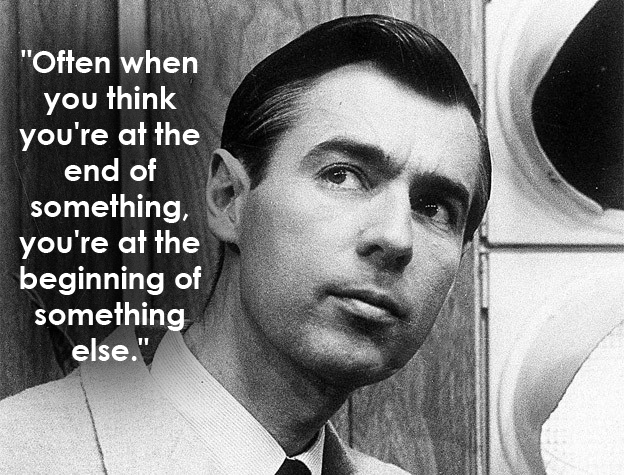
(It seems like a rabbit trail, but stay with me) Growing up, Mr. Rogers was my hero, I dare say, even now.
He was perhaps my very first REAL friend.
I didn’t know it then, but perhaps Fred Rogers was a representation of Jesus to me then.
One who loved me no matter what. He “wanted to do things right, and whatever he did right, he wanted to repeat.”
Can You Say Hero? Tom Junod – Esquire Magazine – November 1998. In this article, it tells how Fred Rogers always had a schedule He kept it daily.
His ability to maintain that schedule; put him in a position to help multitudes of children, and adults; generations!
Oh that I could represent my Jesus in such a way.
Thanks for hanging out with me while I processed just a little through the discrepancies that I see that hold me back.
Let 2020 be the year that we set ourselves free.
Free to help others and to do all that we are tasked to do before we’re done.

 Significant Encounters
You must be logged in to post a comment.